
Technical Tips
The Forehand
In this section, you’ll find in-depth descriptions of The Forehand, along with a detailed analyses of the world’s best players — both men and women.
A space dedicated to understanding the technique, precision, and artistry.
The Forehand
The forehand is the signature stroke of contemporary tennis, combining power, spin and control.
It relies on the ability to draw energy from the ground while maintaining a low and stable centre of gravity, striking the ball on the rise, between the hips and shoulders, and following the direction of the shot.
Everything happens in balance, through a smooth motion that maximises energy transfer and shot efficiency.
Can’t wait to develop your forehand accuracy?
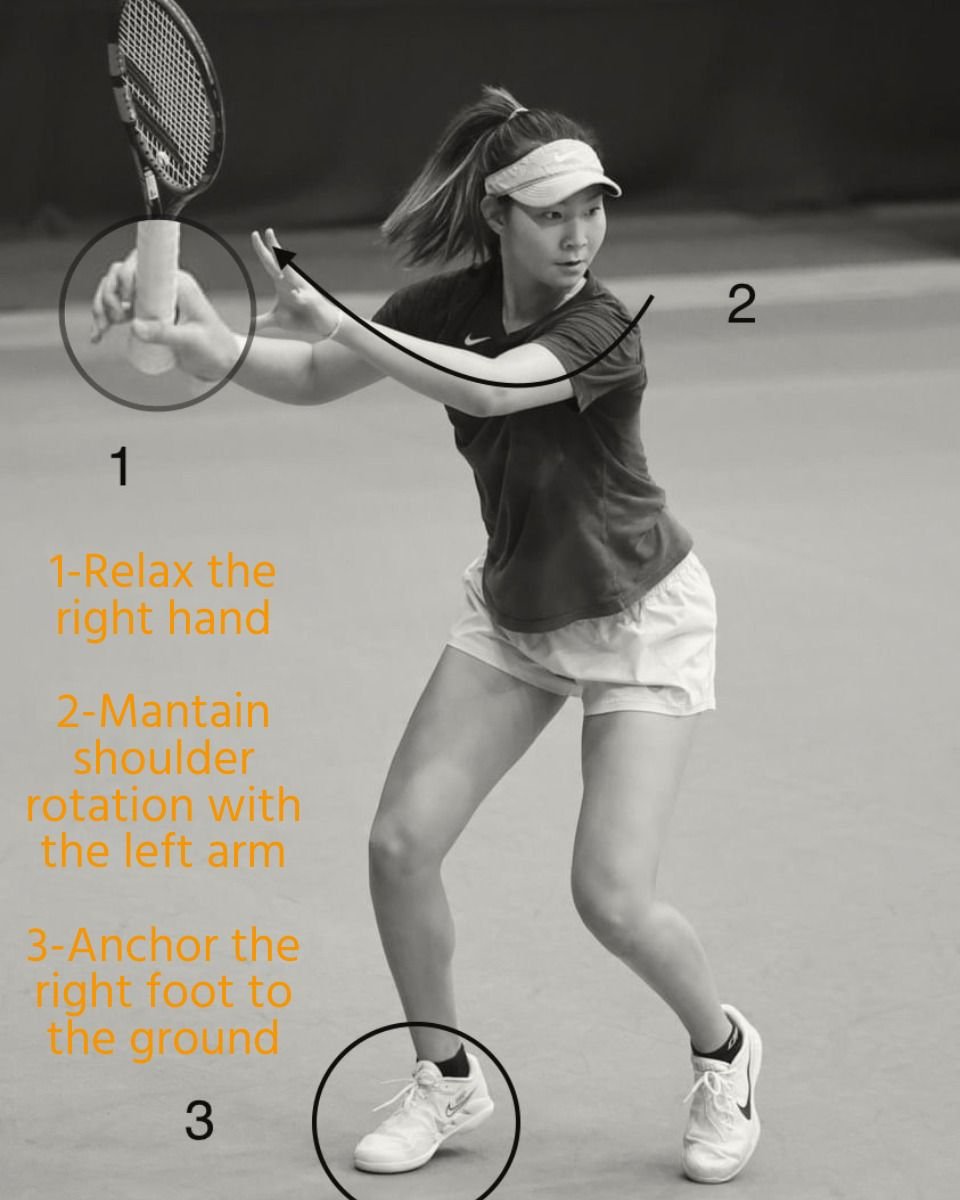
The Ready Position & Split Step
1. Non-dominant hand & racket position
The left hand (for right-handers) holds the racket near the heart, positioned in front of the body. Racket head up, strings facing the court—optimised for energy transfer on impact.
2. Dominant hand position
Right hand at hip level with a light grip—no death grip. Index finger under the handle like a trigger finger, keeping the hand reactive, natural, and sensitive.
3. Body position
Relaxed shoulders, balanced weight evenly distributed (slightly on the balls of the feet). Knees bent for mobility and control in explosive first steps.
4. Split Step
Time it with the bounce (or just before contact)—essential for pre-loading lateral movement. Body primed for rapid, precise first step toward the ball.
5. Vision & reactivity
Head forward—track the bounce first, then watch contact point. This reads trajectory accurately for faster, smarter reactions.
Find out how I can help you being ready every time!
The Preparation - Unit Turn
The unit turn is a fundamental part of the forehand, as it allows the body to create the right amount of tension and prepare for a powerful and accurate shot.
1. Unit Turn
The unit turn consists of rotating the entire upper body together — both the torso and shoulders — with minimal movement of the arms. This prepares the stroke in a smooth and efficient way. This motion “loads” the upper body by creating the key torsion between the shoulders and hips, which is essential for transferring energy to the ball.
When performed correctly, the unit turn creates an angular difference between the shoulders and the hips. This “delay” in rotation allows the torso to store energy, which is then released during the forward swing. The elastic energy accumulated in the body is transferred to the ball, producing power and speed without relying solely on arm strength.
2. Shoulder – Hip Angle
This angular separation between the shoulders and hips is critical for power transfer. The shoulders rotate before the hips, generating elastic force that is released at impact. When this torsion is executed correctly, the ball receives much more energy and speed, significantly improving shot quality.
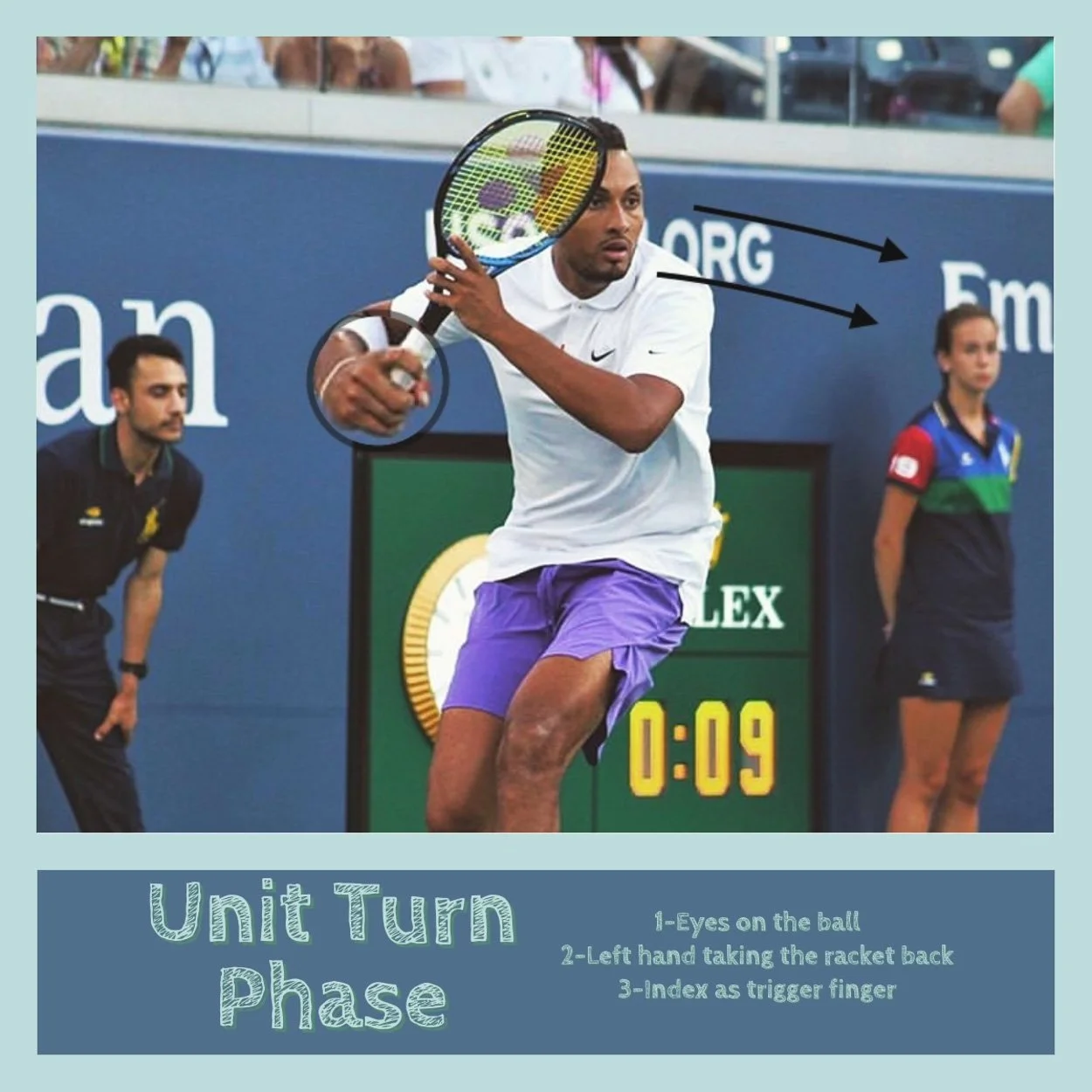
3. Head and Eyes Position
Keeping the head stable and facing forward, with the chin slightly up, is vital for body balance and shot visualisation. It helps maintain proper alignment and a clear view of the stroke.
The eyes should stay focused not only on the contact point with the ball but also on reading the ball’s flight — direction, speed, spin, depth, and bounce. Being able to interpret these factors allows the player to anticipate the ball’s trajectory and respond with the most effective shot.
In essence, when executed properly, the unit turn not only sets up the correct body position for the stroke but also creates a fluid motion that optimises energy transfer from the body into the ball.
Ready to work on your Preparation?
The Loading Phase and
the Maximum Loading Phase
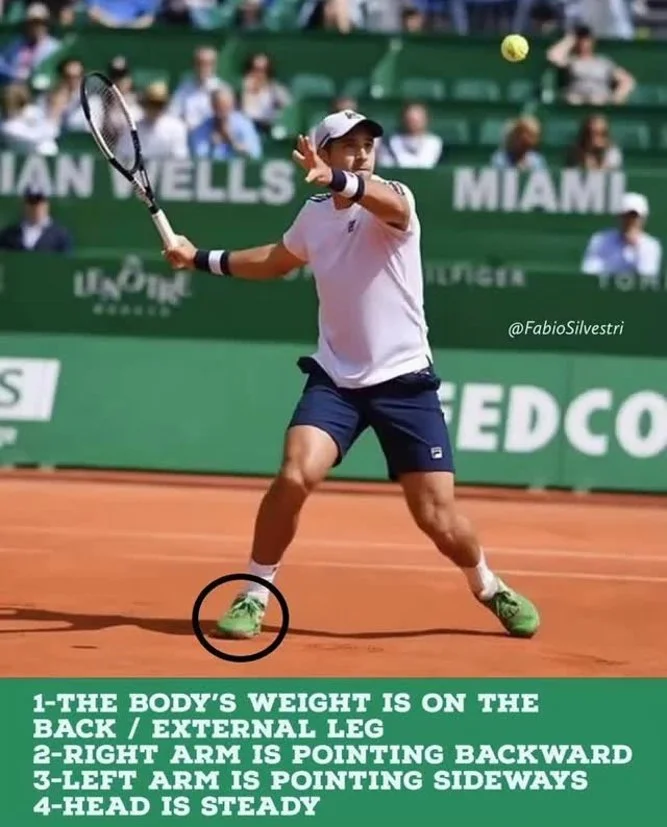
Shoulder Rotation and Angulation
Shoulder rotation creates an optimal angle relative to the line of the court, increasing the separation between the upper body and the pelvis.
This accumulation of elastic energy is essential for generating power and control in the stroke.
Amplitude and Stability
A wide preparation improves balance and allows a smooth transition into the stroke.
The dominant arm is hidden behind the body, with a relaxed hand on the racket handle to avoid unnecessary tension.
The head remains still, aligned with the base of support, to maintain precision and visual control of the ball.
Key Elements of the Maximum Loading Phase
Wide base and stability
The left foot steps forward with a long stride, wider than shoulder width, creating a solid base.
Lowering the center of gravity allows for better balance and more efficient energy transfer.
The weight is still on the back foot, ready for the subsequent pushing phase.
Trunk rotation and positioning
The shoulders remain rotated, with the left arm extended laterally to maintain alignment with the ball.
This helps control distance and preserve elastic energy within the body.
Racket position and relaxation of the dominant arm
The racket head may be oriented upward, forward, or laterally, depending on the swing style.
The dominant arm is relaxed and extended, ready to generate speed without unnecessary tension.
Do you want to experience the power of loading?
Exercise to Improve Shoulder Rotation
and Rhythm
This exercise focuses on trunk rotation and creating the correct angle between the shoulders and hips, which is essential for generating power in the stroke.
The progression is well designed, starting with the medicine ball, a very useful tool to develop core strength and coordination between the upper and lower body.
Throwing the medicine ball with shoulder rotation helps the player “feel” the trunk movement and the separation between shoulders and hips. This increases body awareness and allows the body to load properly before the stroke.
Moving on to hitting with the racket helps improve the fluidity of the movement and transfer energy from the body to the ball more efficiently.
Exercise Progression
The progression is structured, starting from a basic movement and moving toward more complex situations. Each step helps build stability, control, and speed:
Hand feed (first without moving the feet, then adding two steps)
Basket feed (after the shoulder turn, the player is allowed only two steps)
Live rally from the center (simulates a real rally)
Point play (real match conditions)
As the levels progress, the player will be able to adapt their game and react with the correct rhythm and power during real exchanges.
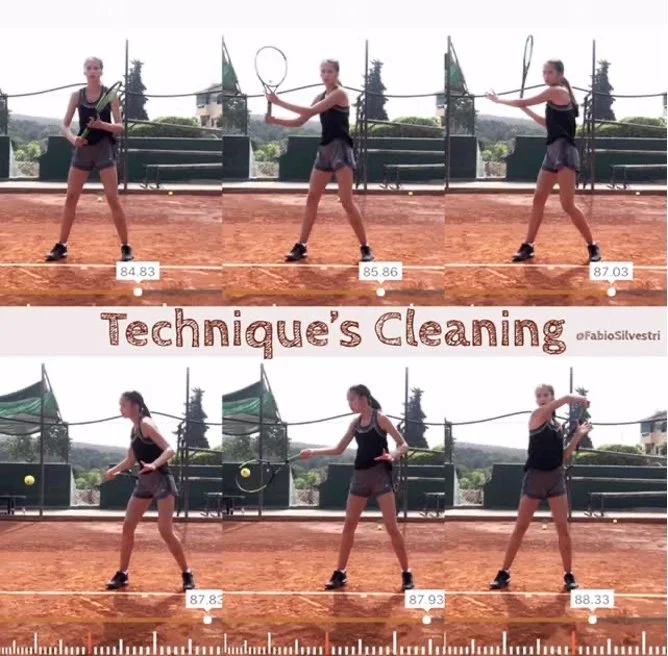
Working with Jenina on Rotation and Rhythm
Jenina’s mental approach to shoulder rotation and finding the right rhythm focuses on developing fluidity and speed in the strokes without sacrificing accuracy.
Working on the separation between shoulders and hips is crucial to create the tension in the body that will be released as energy during the stroke.
Performing these exercises will help you master a powerful and accurate forehand, with optimal use of body forces.
Overall, these exercises, combined with a deeper understanding of rotation mechanics and improved stroke rhythm, are excellent for building a strong technical foundation. If you continue working on these aspects, you will definitely see improvements in ball control, shot power, and reaction speed.
Are you ready to get your forehand to the next level?